Why Animal Studies Do Not Automatically Predict Human Results in Peptide Research

TLDR A peptide can produce striking results in mice and later show little benefit in people. That is not unusual, and it does not necessarily mean anyone made a mistake. Animal studies answer an important question: what does this experimental molecule do in this animal model under these conditions? Human clinical research asks a related … Read more

Retatrutide Beyond Weight Loss: Blood Pressure, Lipids, Sleep Apnea, and Osteoarthritis

Retatrutide research initially attracted attention because of the amount of weight participants lost. But the Phase 3 research program is increasingly asking a different question: What happens to the health conditions associated with obesity when body weight falls by 20%, 25%, or even more? By mid-2026, retatrutide had produced reported improvements in several areas beyond … Read more

How to Read a Peptide Research Study: A Practical Guide to Judging Scientific Evidence

TLDR A paper can be technically accurate and still be easy to misread. Suppose the headline says: “Peptide X reduced tumor growth by 60%.” That sounds impressive. But before deciding what it means, we need to know whether the experiment involved: a purified enzyme, a dish of cancer cells, a mouse xenograft, twenty patients, or … Read more

Peptides vs. Proteins: What’s the Difference?

TLDR Peptides and proteins are made from the same basic molecular ingredients. Both consist of amino acid residues connected through peptide bonds. Both can fold. Both can bind biological targets. Both can act as signaling molecules. And both can have highly specific biological functions. So why do scientists use two different words? The simplest answer … Read more

Peptide Identity vs. Purity: Why They Are Not the Same Thing

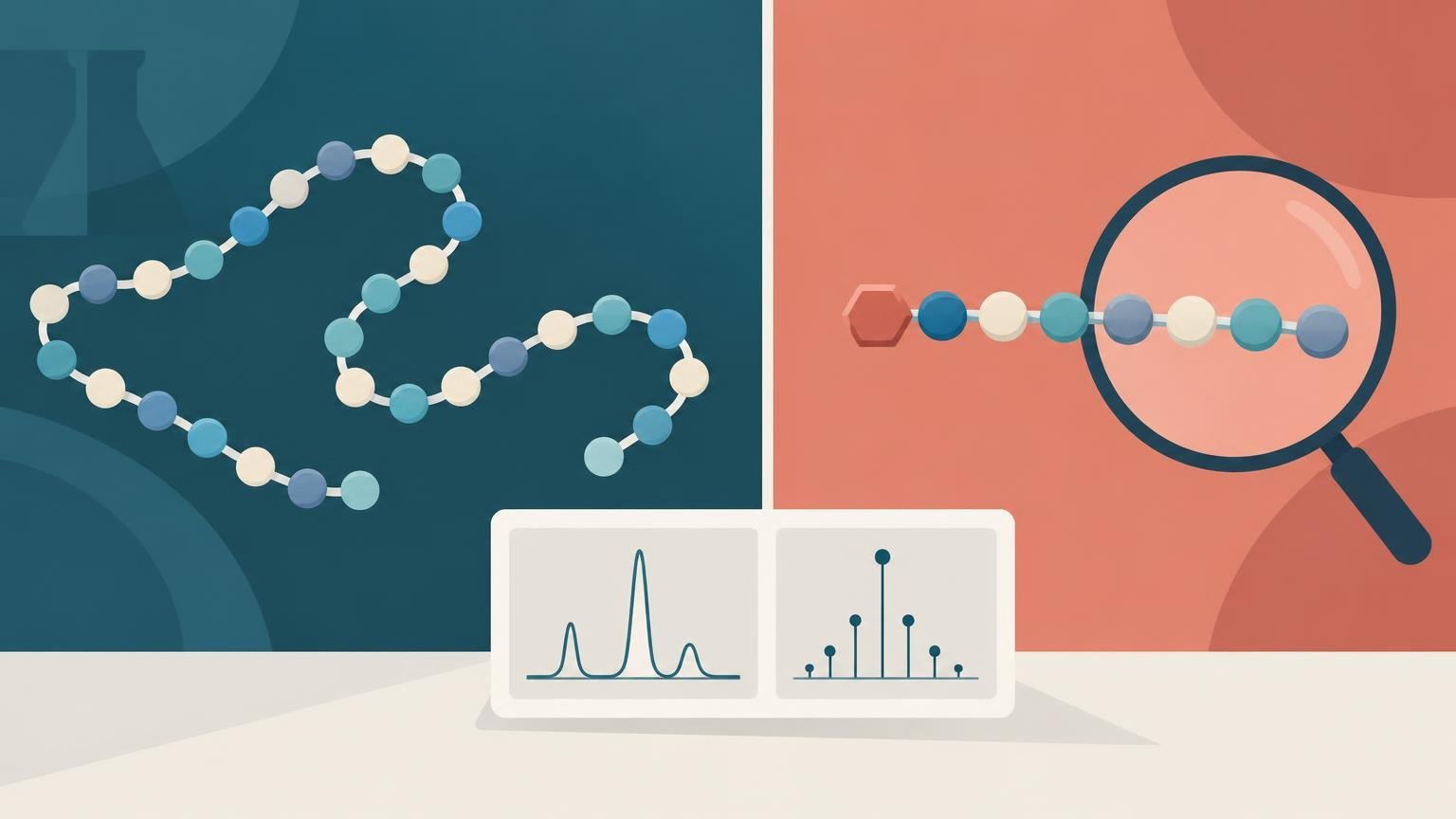
TLDR A peptide certificate of analysis might report two reassuring-looking results: Purity: 99.4% by HPLC Mass: consistent with expected molecular weight Those results describe different things. One asks how clean the sample appears under a particular chromatographic method. The other provides evidence about what molecule is present. Understanding peptide identity vs. purity is important because … Read more