
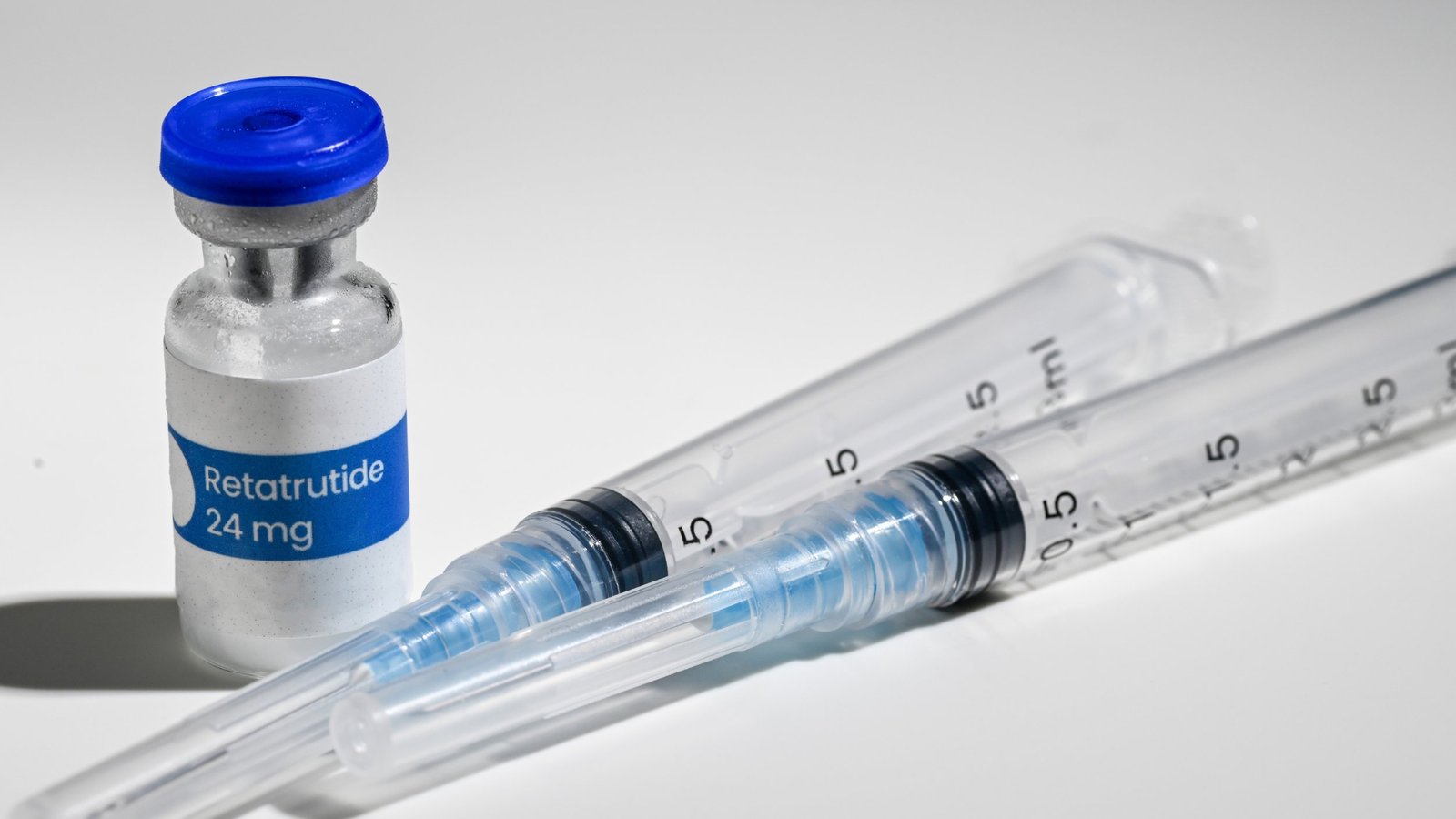
What Is Retatrutide? How the GLP-1, GIP, and Glucagon Triple Agonist Works
TLDR
Retatrutide, also known as LY3437943, is an investigational 39-amino-acid peptide developed by Eli Lilly. It is designed as a single molecule capable of activating three related metabolic receptors: the GIP receptor, GLP-1 receptor, and glucagon receptor. Its design combines strong GIP receptor activity with GLP-1 and glucagon receptor activity, while a C20 fatty-diacid modification promotes albumin binding and helps extend its circulating half-life to roughly six days.
The scientific idea behind retatrutide is broader than simply adding another appetite-suppressing signal. GLP-1 and GIP receptor activity influence food intake, insulin secretion, and glucose control, while glucagon receptor activation may add effects on hepatic lipid metabolism and energy expenditure. However, much of the mechanistic evidence assigning specific weight-loss effects to the glucagon component still comes from animal studies rather than direct mechanistic experiments in humans.
As of September 2026, retatrutide remains investigational and is not FDA approved. Phase 3 studies have reported substantial effects on body weight and several obesity-related conditions, but some of those results remain company-reported topline data rather than complete peer-reviewed publications.
Retatrutide is sometimes called a “GLP-3” drug online. That term is scientifically inaccurate. There is no GLP-3 receptor involved. Retatrutide is more accurately described as a triple GIP/GLP-1/glucagon receptor agonist.
-
Long Peptide Synthesis: Why Sequence Length Changes Yield and Purity
Long peptide synthesis is governed by more than residue count. Cumulative reaction losses, sequence-dependent aggregation, related impurities, and purification recovery determine whether a proposed route is practical.
-
Analytical Variability in Peptide Testing: Why Two Labs May Not Report the Same Number
Two laboratories can produce different peptide results without either result being obviously wrong. A defensible comparison starts by confirming the measurand, sample equivalence, method, calibration, data processing, and uncertainty.
-
How to Store Lyophilized Peptides for Laboratory Research
A research-oriented guide to storing lyophilized peptides based on product-specific stability data, package integrity, environmental controls, and documented handling.
-
Peptide Lot Traceability: Connecting a Vial, Lot Number, and Test Report
A practical framework for connecting a peptide vial or package to its lot-specific certificate of analysis and supporting analytical records without overstating what that documentation proves.
-
Peptide Oxidation Explained: Common Residues and Degradation Pathways
A research-oriented guide to oxidation-prone peptide residues, oxygen-, light-, and metal-driven pathways, and the analytical evidence needed to localize oxidative modifications.
-
How to Read a Peptide HPLC Chromatogram
A practical guide to reading peptide HPLC chromatograms without confusing retention time, peak area, chromatographic purity, molecular identity, or absolute peptide content.
What Is Retatrutide?
Retatrutide is a synthetic peptide being developed by Eli Lilly for obesity, type 2 diabetes, and several related metabolic conditions.
Its original development code was LY3437943. The molecule was first described in detail in a 2022 Cell Metabolism paper that followed its development from receptor pharmacology through animal experiments and an initial human Phase 1 study.
The defining feature of retatrutide is that one peptide molecule activates three different receptors:
| Receptor | Natural Hormone | Major Areas of Research Interest |
|---|---|---|
| GIPR | GIP | Glucose-dependent insulin secretion, metabolic signaling, CNS and adipose effects |
| GLP-1R | GLP-1 | Insulin secretion, appetite regulation, glucagon suppression, gastric and CNS signaling |
| GCGR | Glucagon | Hepatic glucose production, lipid metabolism, amino-acid metabolism, possible energy-expenditure effects |
All three belong to the class B1 family of G protein-coupled receptors, or GPCRs. These receptors normally respond to peptide hormones and are important regulators of energy and glucose metabolism.
That makes retatrutide a unimolecular polyagonist. It is not a mixture of GLP-1, GIP, and glucagon. Researchers engineered one peptide backbone to contain enough structural information to engage all three receptor systems.
Why Develop a Triple Agonist?
The idea developed from earlier work with single- and dual-receptor agonists.
GLP-1 receptor agonists demonstrated that activating one nutrient-responsive hormone pathway could improve glycemic control while also reducing food intake and body weight.
The next major step was dual agonism.
Tirzepatide, for example, activates both GIP and GLP-1 receptors. Retatrutide adds glucagon receptor activity to that general multireceptor strategy.
The hypothesis is that these pathways may produce complementary metabolic effects rather than simply duplicating one another.
GLP-1 and GIP receptor activity can support glucose regulation and influence food intake. Glucagon receptor activity may add effects involving energy metabolism and hepatic lipid handling.
The important word is may.
The clinical effects of the complete molecule are now well established enough to measure in trials, but researchers do not yet know exactly what percentage of a person’s weight change can be assigned independently to each receptor. The biology of multireceptor agonists is more complicated than adding three isolated hormone effects together.
Retatrutide Is Based on a GIP-Like Peptide Backbone
Retatrutide is a 39-amino-acid peptide engineered from a GIP-related backbone.
The molecule contains several structural changes intended to alter receptor pharmacology and improve its behavior as a drug candidate.
Research descriptions identify three non-standard amino acid substitutions. Two positions contain α-aminoisobutyric acid, commonly abbreviated Aib, while another contains α-methyl-L-leucine. These modifications helped optimize receptor activity and resistance to enzymatic degradation.
The molecule is also modified at lysine position 17 with a linker carrying a C20 fatty diacid.
That lipid modification is especially important.
It promotes reversible binding to albumin in the bloodstream. Albumin association helps protect the peptide from rapid clearance and contributes to a circulating half-life of roughly six days.
That pharmacokinetic profile is what makes once-weekly administration practical in clinical trials.
Retatrutide therefore illustrates a recurring theme in modern peptide engineering: researchers do not simply copy a natural hormone sequence. They modify the sequence, enzyme resistance, receptor balance, and pharmacokinetics together.
How Strongly Does Retatrutide Activate Each Receptor?
One of the most useful parts of the original discovery paper is that the researchers directly tested retatrutide against all three human receptors.
They used engineered HEK-293 cells expressing low levels of human GCGR, GIPR, or GLP-1R and measured intracellular cAMP production after receptor activation.
Retatrutide acted as a full agonist at all three receptors, but it did not activate them with equal potency.
At the human glucagon receptor, retatrutide had an EC50 of about 5.79 nM, compared with approximately 1.97 nM for natural human glucagon. That made retatrutide about 2.9-fold less potent than native glucagon in that assay.
At the human GIP receptor, retatrutide’s EC50 was approximately 0.0643 nM, compared with 0.574 nM for GIP. In that system, retatrutide was about 8.9-fold more potent than the native GIP reference peptide.
At the human GLP-1 receptor, retatrutide had an EC50 of approximately 0.775 nM, compared with 0.312 nM for GLP-1, making retatrutide about 2.5-fold less potent than native GLP-1 under those assay conditions.
Those numbers are important because they show that “triple agonist” does not mean equal receptor potency.
The original researchers described the molecule as having relatively balanced GCGR and GLP-1R activity, with stronger GIPR activity.
And those potency measurements should not be interpreted as direct predictions of clinical effect. EC50 values depend on the assay system, receptor density, signaling pathway, and other experimental conditions.
How Do These Receptors Work?
GLP-1R, GIPR, and GCGR are closely related class B1 GPCRs.
The natural peptide hormone initially interacts with the receptor’s extracellular domain. The peptide’s N-terminal region then engages more deeply within the transmembrane receptor core and helps stabilize an active receptor conformation.
Once activated, these receptors can couple to intracellular signaling proteins.
A major pathway involves the stimulatory G protein, Gs.
Gs activates adenylyl cyclase, which increases intracellular cyclic AMP, or cAMP.
From there, signaling branches into additional pathways that depend on the receptor and cell type. In pancreatic beta cells, incretin-receptor signaling can contribute to calcium mobilization and glucose-dependent insulin release. In hepatocytes, glucagon-receptor signaling can increase hepatic glucose output and influence lipid and amino-acid metabolism.
But receptor signaling is not simply an on/off switch.
GLP-1R, GIPR, and GCGR differ in receptor trafficking, desensitization, downstream coupling, tissue expression, and signal amplification.
That helps explain why combining three related GPCRs can create pharmacology that is more complex than simply administering three natural hormones together.
What Does the GLP-1 Component Do?
GLP-1 is an incretin hormone produced primarily by intestinal L cells in response to nutrient intake.
Its receptor is expressed in multiple tissues, including pancreatic and nervous-system populations.
GLP-1 receptor activation can enhance glucose-dependent insulin secretion. The phrase glucose-dependent is important because the insulinotropic response is linked to glucose availability rather than occurring independently of blood glucose.
GLP-1 signaling can also suppress glucagon secretion in appropriate physiological settings.
Outside pancreatic signaling, GLP-1 receptor activity has important effects on appetite and satiety. GLP-1 signaling in neural circuits involved in feeding can reduce energy intake. Gastric-emptying effects can also influence post-meal physiology, particularly during earlier treatment, although chronic pharmacology is more complicated than simply describing GLP-1 agonists as drugs that “slow the stomach.”
The GLP-1 component therefore provides part of the glucose-lowering and food-intake-reducing foundation of retatrutide’s pharmacology.
What Does the GIP Component Do?
GIP stands for glucose-dependent insulinotropic polypeptide. Historically, it was also called gastric inhibitory polypeptide.
GIP is another incretin hormone released from the intestine after nutrient intake.
Its best-established physiological role is promoting glucose-dependent insulin secretion through the GIP receptor on pancreatic beta cells.
But GIP biology extends beyond the pancreas.
GIP receptors are found in several tissues, and research has investigated potential roles in adipose biology, the nervous system, glucagon secretion, and metabolic nutrient handling.
What makes this area scientifically interesting is that GIP agonism was not always an obvious obesity strategy.
Older work associated GIP signaling with fat storage, and at one point both GIP receptor agonism and GIP receptor antagonism were proposed as potential ways to influence obesity.
The success of tirzepatide forced researchers to rethink that simple model.
Exactly how sustained pharmacological GIP receptor activation contributes to weight reduction when paired with GLP-1 receptor agonism remains an active research area.
Retatrutide makes the question even more complicated because its GIP receptor activity is particularly potent relative to its activity at the other two receptors.
So it would be too simplistic to say that GIP merely “adds more appetite suppression.”
The contribution appears broader and is still being worked out.
Why Add the Glucagon Receptor?
This is the part of retatrutide that initially seems counterintuitive.
Glucagon is famous for raising blood glucose.
It is secreted by pancreatic alpha cells and acts strongly on glucagon receptors in the liver. Among its physiological effects, glucagon promotes hepatic glucose output during fasting and hypoglycemia.
Why would researchers deliberately add glucagon receptor activity to a drug being developed for obesity and type 2 diabetes?
Because glucagon does more than regulate glucose.
Research has linked glucagon receptor signaling to:
hepatic lipid oxidation,
amino-acid metabolism,
changes in food intake,
and increased energy expenditure under some experimental conditions.
That created the idea that glucagon receptor activity might increase the amount of energy being used while GLP-1 and GIP signaling help control food intake and glucose metabolism.
There is an obvious tension, however.
Too much glucagon receptor activity could increase hepatic glucose production.
The challenge in designing a molecule like retatrutide is therefore not simply to maximize glucagon activity. It is to create a pharmacological balance in which incretin receptor signaling offsets glucagon’s glucose-raising tendency while retaining potentially useful metabolic effects.
What Did the Original Mouse Experiments Show?
The original retatrutide development study provides some of the strongest evidence for why the glucagon receptor was added.
In obese mice, retatrutide reduced food intake and body weight while improving glycemic control.
The investigators compared multireceptor pharmacology and concluded that GLP-1 and GIP receptor activity primarily reduced calorie intake, while the addition of glucagon receptor activity further increased weight loss through increased energy expenditure in the mouse experiments.
That finding is central to the scientific theory behind retatrutide.
But it is equally important not to overextend it.
A 2025 IUPHAR review examining glucagon receptor agonism emphasized that the mechanistic evidence for GCGR-driven increases in energy expenditure remains heavily dependent on preclinical rodent research. Direct evidence establishing an equivalent chronic mechanism in humans remains limited.
So this sentence is reasonable:
Glucagon receptor activation increased energy expenditure in the preclinical retatrutide program.
This sentence goes too far:
Retatrutide produces its human weight loss because glucagon burns more calories.
The human mechanism has not been resolved that precisely.
Does Retatrutide Increase Energy Expenditure in Humans?
We do not yet have enough evidence to treat that as established.
The large weight reductions observed in clinical trials are consistent with a powerful effect on energy balance.
But energy balance has two sides:
energy intake
and
energy expenditure.
Retatrutide clearly influences food intake and appetite-related pathways through incretin pharmacology.
Whether chronic glucagon receptor activation adds a quantitatively important increase in human energy expenditure, and how large that contribution is, remains an active research question.
The recent glucagon literature specifically warns that preclinical evidence should not be presented as though the same mechanisms have already been proven in people.
That uncertainty is one of the most interesting unanswered questions surrounding retatrutide.
How Can Retatrutide Activate Glucagon Receptors Without Worsening Glucose Control?
This is another area where the three-receptor design matters.
Activating the hepatic glucagon receptor can increase glucose production.
But GLP-1 and GIP receptor activation can strongly enhance glucose-dependent insulin secretion.
GLP-1 signaling can also reduce glucagon secretion in certain physiological settings.
The combined molecule is therefore designed around counterbalancing effects rather than isolated glucagon receptor agonism.
Clinical evidence supports the idea that the net result can still favor improved glycemic control.
In the Phase 2 type 2 diabetes trial, 281 participants were randomized to several retatrutide doses, placebo, or dulaglutide.
At 24 weeks, HbA1c fell by approximately 2.02 percentage points in the 12 mg retatrutide group, compared with essentially no change in placebo and a 1.41-point reduction with dulaglutide. At 36 weeks, weight reductions reached approximately 16.9% in the 12 mg group.
So the presence of glucagon receptor activity did not prevent substantial glucose lowering in that trial.
It does not follow, however, that more glucagon receptor activation would always be better.
The relative balance among the three receptors is likely an important part of the molecule’s design.
Retatrutide Is Not Simply “Stronger Tirzepatide”
Another common simplification is to describe retatrutide as tirzepatide with an extra receptor.
Structurally and pharmacologically, that misses important details.
Tirzepatide is a dual GIP/GLP-1 receptor agonist.
Retatrutide activates GIPR, GLP-1R, and GCGR.
But adding GCGR activity required retuning the entire peptide.
Retatrutide’s potency ratios, sequence substitutions, fatty-acid attachment site, and overall receptor profile are its own.
And because there has not yet been a completed published head-to-head efficacy trial between retatrutide and tirzepatide, results from separate trials should not simply be compared as though the participants and study designs were identical.
A direct Phase 3 retatrutide-versus-tirzepatide study, TRIUMPH-5, is underway, with completion expected in late 2026.
That trial should provide much stronger comparative evidence than cross-trial percentage comparisons.
Why Does Retatrutide Last About a Week?
Unmodified peptide hormones are often cleared very quickly.
That would make them impractical for once-weekly pharmacology.
Retatrutide’s C20 fatty-diacid side chain helps solve this problem by increasing reversible association with albumin.
Albumin is an abundant circulating protein.
When an acylated peptide spends substantial time associated with albumin, its apparent distribution and clearance can change significantly.
The modified peptide is also engineered to resist some enzymatic degradation.
Together, these properties give retatrutide a reported pharmacokinetic half-life of roughly six days, supporting once-weekly subcutaneous administration.
The original Phase 1 work found that body-weight reduction following a single dose remained observable as far as day 43, which was consistent with a long-acting pharmacological profile.
A six-day pharmacokinetic half-life does not mean each injection suddenly stops working on day six.
Half-life describes the rate at which circulating drug exposure declines.
What Did the Phase 2 Obesity Trial Show?
The 2023 New England Journal of Medicine Phase 2 trial provided the first major clinical efficacy test in adults with obesity or overweight without diabetes.
The randomized, double-blind, placebo-controlled trial enrolled 338 adults.
Participants received once-weekly retatrutide at maintenance doses ranging from 1 mg through 12 mg or placebo for 48 weeks.
Mean weight change at 48 weeks was approximately:
1 mg: -8.7%
4 mg: -17.1%
8 mg: -22.8%
12 mg: -24.2%
Placebo: -2.1%
In the 12 mg group, 100% of participants in the efficacy estimate achieved at least 5% weight reduction, 93% achieved at least 10%, and 83% achieved at least 15%.
Perhaps equally interesting, the weight-loss curve had not clearly reached a plateau at 48 weeks in the higher-dose groups.
That finding helped motivate the longer Phase 3 program.
What Have Phase 3 Trials Added?
By 2026, the retatrutide program had advanced substantially beyond the original Phase 2 trials.
TRIUMPH-1 enrolled 2,335 participants with obesity or overweight without type 2 diabetes and completed its main study period in April 2026.
Lilly subsequently reported that participants receiving 12 mg retatrutide lost an average 28.3% of baseline body weight over 80 weeks in the efficacy analysis reported by the company. In an extension among participants entering with BMI of at least 35, average reduction reached 30.3% at 104 weeks.
Lilly has also reported positive Phase 3 findings in adults with obesity and type 2 diabetes, severe obesity with cardiovascular disease, knee osteoarthritis, and obstructive sleep apnea.
These findings show that retatrutide’s effects are no longer based only on early proof-of-concept studies.
But the evidence needs to be graded correctly.
Some 2026 Phase 3 results have been presented at scientific meetings or announced by Lilly before full peer-reviewed publication. Company-reported topline data are valuable, particularly from randomized Phase 3 trials, but complete journal publications allow independent readers to inspect methods, statistical analyses, subgroup results, adverse events, discontinuations, and other details more fully.
What Does the Liver-Fat Research Tell Us?
Retatrutide has also produced notable findings in metabolic dysfunction-associated steatotic liver disease, or MASLD.
A randomized Phase 2a substudy included 98 participants with at least 10% liver fat.
At 24 weeks, mean relative liver-fat changes were approximately:
42.9% reduction with 1 mg,
57.0% reduction with 4 mg,
81.4% reduction with 8 mg,
82.4% reduction with 12 mg,
compared with a 0.3% increase with placebo.
At the 12 mg dose, 86% of participants reached liver-fat levels below 5% at week 24.
These findings are particularly interesting in light of glucagon receptor biology because GCGR signaling is closely tied to hepatic metabolism.
But the study also found that liver-fat reductions were associated with changes in body weight, abdominal fat, insulin sensitivity, and lipid metabolism.
So it is not currently possible to attribute the liver effect entirely to direct glucagon receptor activation.
Does Retatrutide Only Reduce Fat?
No.
Significant weight reduction normally includes changes in both fat mass and lean mass.
A 2025 body-composition substudy used DXA scanning in participants with type 2 diabetes.
Retatrutide produced large reductions in total fat mass. Lean mass also decreased.
The investigators reported that the proportion of lean-mass loss relative to overall weight loss was similar to that seen with other obesity treatments rather than showing a disproportionately high loss of lean tissue.
This is another example of why mechanistic claims need precision.
It would be inaccurate to describe retatrutide as a drug that “burns only fat” or automatically preserves all muscle.
What Are the Main Side Effects Observed So Far?
The adverse-event pattern in retatrutide trials has looked broadly similar to other incretin-based therapies.
The most commonly reported effects in the Phase 2 obesity trial were gastrointestinal.
These included symptoms such as nausea, diarrhea, vomiting, and constipation.
The events were generally mild to moderate, occurred more frequently at higher doses, and were partially reduced by using a lower starting dose and gradual escalation.
The Phase 2 study also observed dose-dependent increases in heart rate that peaked around 24 weeks and then declined.
The type 2 diabetes Phase 2 study similarly found gastrointestinal effects to be the most common adverse events, with no severe hypoglycemia and no deaths reported during that trial.
Longer and larger Phase 3 studies are important because uncommon adverse events may not appear clearly in smaller Phase 2 populations.
Why Heart Rate Is Being Watched
Glucagon biology makes cardiovascular measurements particularly interesting.
Retatrutide’s Phase 2 program observed a dose-dependent rise in heart rate.
A change in heart rate does not by itself establish cardiovascular harm.
But it creates an obvious reason to collect longer-term cardiovascular data.
TRIUMPH-Outcomes is specifically evaluating cardiovascular and kidney outcomes in approximately 10,000 adults living with obesity and cardiovascular disease and/or chronic kidney disease.
Those outcome studies matter more for long-term risk-benefit assessment than simply knowing whether body weight or a biomarker improved over several months.
Is Retatrutide a “GLP-3”?
No.
The nickname has become common online because retatrutide activates three hormone receptors.
But there is no new hormone called GLP-3 involved in the mechanism.
Retatrutide activates:
GIPR,
GLP-1R,
and GCGR.
Lilly itself has specifically described “GLP-3” as scientifically inaccurate and recommends the term triple agonist instead.
Using the correct terminology matters because “GLP-3” incorrectly implies that retatrutide works through three GLP receptors rather than through three distinct hormone systems.
Is Retatrutide FDA Approved?
No.
As of September 2026, retatrutide remains an investigational molecule.
Lilly states that it has not been approved by FDA or any other regulatory agency and is not available for public use outside the company’s clinical trials.
The development program remains active across obesity, type 2 diabetes, cardiovascular and kidney outcomes, MASLD, chronic low back pain, osteoarthritis, and other obesity-related conditions.
Lilly announced in July 2026 that it plans to submit a regulatory application to FDA in the first quarter of 2027.
Regulatory review will ultimately determine whether a commercial retatrutide product is approved and, if so, for which indications, doses, and populations.
What We Know About the Mechanism, and What We Do Not
Retatrutide gives researchers an unusually interesting opportunity to study energy balance because it combines three related receptor systems in one molecule.
Some parts of the mechanism are well supported.
We know that retatrutide is a full agonist at human GIP, GLP-1, and glucagon receptors in laboratory assays.
We know its receptor activity is not equal: GIPR activity is particularly potent relative to the corresponding natural ligand.
We know the lipidated peptide has a long pharmacokinetic profile suitable for once-weekly exposure.
And randomized clinical trials demonstrate large effects on body weight and glycemic measures.
Other questions remain unresolved.
We do not know exactly how much of the clinical weight reduction is independently attributable to GIPR, GLP-1R, or GCGR.
We do not yet know how strongly chronic glucagon receptor agonism increases energy expenditure in humans.
We do not know whether retatrutide’s effects on liver fat are primarily direct hepatic effects, secondary to weight loss, or a combination of both.
And long-term cardiovascular, renal, metabolic, and safety outcomes are still being studied.
That uncertainty is not a weakness in the science.
It is where the research currently stands.
Why Retatrutide Is Scientifically Important
The significance of retatrutide goes beyond its reported weight-loss percentages.
It represents a change in how peptide drugs can be designed.
Early peptide therapeutics often attempted to reproduce or extend the action of one natural hormone.
Retatrutide takes a different approach.
Researchers began with related hormone systems, engineered one peptide to activate three receptors, tuned the relative receptor potencies, introduced non-natural amino acids to change metabolic stability, and added lipidation to create once-weekly pharmacokinetics.
In that sense, retatrutide is not simply another incretin analog.
It is an example of engineered peptide polypharmacology.
Instead of designing one molecule for one receptor, researchers deliberately built a single peptide to create a controlled network of metabolic signals.
Whether that approach ultimately produces better long-term clinical outcomes than existing therapies still needs to be demonstrated.
But from a peptide-engineering perspective, retatrutide is already an important research case.
FAQs
What exactly is retatrutide?
Retatrutide, or LY3437943, is a 39-amino-acid investigational peptide developed by Eli Lilly. It is engineered to activate GIP, GLP-1, and glucagon receptors with one molecule.
Is retatrutide a GLP-1 drug?
Partly. Retatrutide activates the GLP-1 receptor, but it also activates the GIP receptor and glucagon receptor. Calling it only a GLP-1 agonist leaves out much of its pharmacology.
Is retatrutide GLP-3?
No. “GLP-3” is an informal and scientifically inaccurate nickname. There is no GLP-3 receptor involved.
How is retatrutide different from semaglutide?
Semaglutide is primarily a GLP-1 receptor agonist. Retatrutide activates GIPR, GLP-1R, and GCGR.
How is retatrutide different from tirzepatide?
Tirzepatide activates GIP and GLP-1 receptors. Retatrutide adds glucagon receptor agonism and has a different peptide structure and receptor-potency profile.
Why would an obesity drug activate the glucagon receptor?
Glucagon receptor signaling can increase hepatic glucose output, but it also influences lipid metabolism, amino-acid metabolism, and potentially energy expenditure. Retatrutide combines GCGR activity with glucose-lowering incretin receptor activity. The exact contribution of chronic GCGR activation to human weight loss is still being studied.
How long is retatrutide’s half-life?
Published Phase 1 research indicates an average pharmacokinetic half-life of roughly six days, supporting once-weekly dosing.
Does retatrutide increase metabolism?
Preclinical mouse studies found that the glucagon receptor component increased energy expenditure. Whether the same mechanism makes a major quantitative contribution to weight loss in humans has not yet been clearly established.
Is retatrutide approved?
No. As of September 2026, retatrutide remains investigational and is not FDA approved.
References
- Coskun T, Urva S, Roell WC, et al. LY3437943, a novel triple glucagon, GIP, and GLP-1 receptor agonist for glycemic control and weight loss: From discovery to clinical proof of concept. Cell Metabolism. 2022;34:1234-1247.e9. PubMed record | Full Cell Metabolism article
- Jastreboff AM, Kaplan LM, Frías JP, et al. Triple-Hormone-Receptor Agonist Retatrutide for Obesity: A Phase 2 Trial. New England Journal of Medicine. 2023;389:514-526. NEJM full article
- Rosenstock J, Frías J, Jastreboff AM, et al. Retatrutide, a GIP, GLP-1 and glucagon receptor agonist, for people with type 2 diabetes: a randomized Phase 2 trial. The Lancet. 2023;402:529-544. PubMed record
- Sanyal AJ, Kaplan LM, Frias JP, et al. Triple hormone receptor agonist retatrutide for metabolic dysfunction-associated steatotic liver disease: a randomized Phase 2a trial. Nature Medicine. 2024;30:2037-2048. Nature Medicine article
- Coskun T, Wu Q, Schloot NC, et al. Effects of retatrutide on body composition in people with type 2 diabetes. The Lancet Diabetes & Endocrinology. 2025;13:674-684. PubMed record
- Thomas PS, et al. Class B1 GPCRs: insights into multireceptor pharmacology for the treatment of metabolic disease. American Journal of Physiology-Endocrinology and Metabolism. 2024. Full text at PubMed Central
- IUPHAR review. From foe to friend: Repurposing glucagon to treat obesity and type 2 diabetes. 2025. PubMed record | Full text at PubMed Central
- Müller TD, Finan B, Clemmensen C, DiMarchi RD, Tschöp MH. Glucagon Regulation of Energy Expenditure. International Journal of Molecular Sciences. Full text at PubMed Central
- Eli Lilly and Company. What to Know About Retatrutide. Updated July 2026. Lilly retatrutide research and development overview
- ClinicalTrials.gov. TRIUMPH-1: A Study of Retatrutide in Participants Who Have Obesity or Overweight. NCT05929066. ClinicalTrials.gov study record
- ClinicalTrials.gov. TRIUMPH-5: Retatrutide Compared With Tirzepatide in Adults With Obesity. NCT06662383. ClinicalTrials.gov head-to-head trial record
- ClinicalTrials.gov. TRIUMPH-Outcomes: Cardiovascular and Kidney Outcomes With Retatrutide. NCT06383390. ClinicalTrials.gov outcomes study